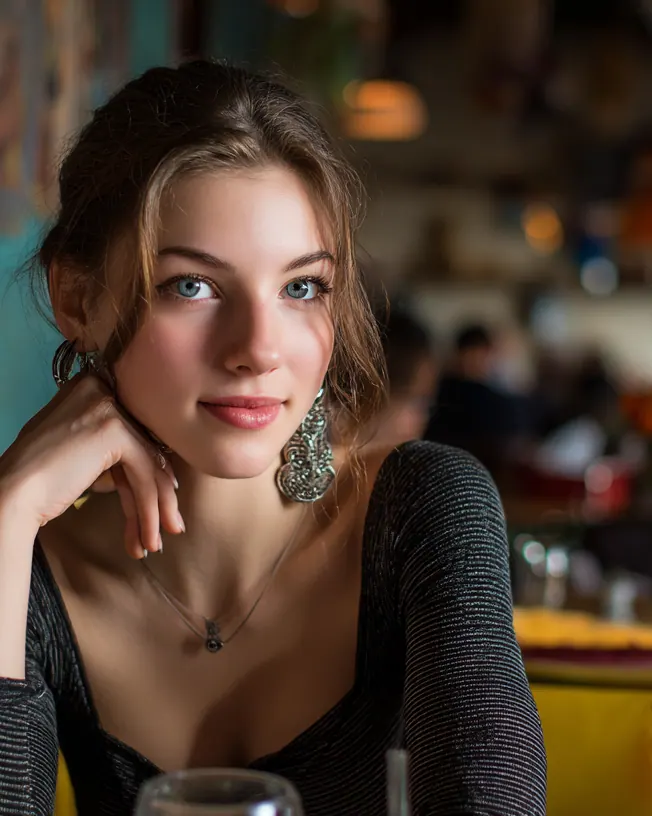






Serbian women tend to be outgoing, hospitable and close to their families: most of those on international dating sites live in Belgrade or Novi Sad, work or study, celebrate Orthodox holidays and the family slava, and like long evenings with friends in a café or a kafana. You can meet them on dating sites with letters, chat and video, and then travel to Serbia for a first date, since the country is open for short visits. Below we cover family, faith, hospitality, food, the two alphabets, dating customs, a short note on Croatian women and the questions men ask most.
Read all of this as tendencies. A Serbian woman is first of all herself, and a few letters will tell you more about her than any guide.
Who you meet on Serbian dating profiles
GoldenBride's Serbia page lists members from Belgrade and Novi Sad. Profiles mention degrees and jobs in law, economics, healthcare, teaching, hospitality, design and IT, plus hobbies such as sports, music, travel and cooking. Many women write openly that they want a husband and children, and many are close to their parents and siblings.
Belgrade and Novi Sad
Belgrade stands where the Sava flows into the Danube. The Kalemegdan fortress park looks over the confluence, Knez Mihailova street fills with walkers every evening, and in summer the river rafts, splavovi, serve as cafés and clubs. The city keeps late hours, and dinner at nine is ordinary. Novi Sad, about an hour north, is calmer and greener, with the Petrovaradin Fortress above the Danube and a university crowd in the old center. Every July the fortress hosts the EXIT music festival.
Family and the slava
Family comes first for most Serbs. Grown children visit parents often, grandparents help with children, and big events gather cousins, godparents and neighbours. Godparents, kumovi, hold a special place: the kum who witnesses a wedding often becomes godfather to the couple's children.
The custom most foreigners have never heard of is the slava, the day of the family's patron saint. Each family inherits its saint through the father's line, so the same saint may be celebrated for generations, St. Nicholas in one family and St. George in another. On the slava, the family lights a special candle, has a priest bless the slavski kolač (a decorated bread) and serves žito, boiled wheat with sugar and walnuts. Then the house stays open all day for relatives and friends. If her family invites you to their slava, accept: it means you are being welcomed into the family circle.
Faith and holidays
Most Serbs belong to the Serbian Orthodox Church, which follows the Julian calendar. That moves Christmas to January 7. On Christmas Eve, families bring in a badnjak, a young oak branch, and burn or display it, and on Christmas Day they break a round bread called česnica with a coin hidden inside. Easter brings dyed eggs and egg-tapping contests. Many people go to church mainly on holidays, while customs at home stay strong.
Hospitality
Serbian hospitality has a reputation for a reason. A guest in a Serbian home is often greeted with slatko, a spoonful of fruit preserve with a glass of water, followed by coffee, then food, then more food. Turning down a second helping takes some practice. Bringing something when you visit is expected: flowers for the hostess, chocolates or a bottle of wine.
The kafana, a traditional tavern with grilled meat, wine and often live folk music, is where Serbs celebrate, argue about football and sing along late into the night. A kafana evening with her friends tells you a lot about how she lives.
Food
Serbian cooking leans on the grill. Ćevapi (small grilled sausages) and pljeskavica (a large spiced patty) come with chopped onion, flatbread and kajmak, a soft clotted dairy spread. Ajvar, a red pepper relish, is made at home every autumn, and many apartments smell of roasting peppers in September. In winter there is sarma, cabbage rolls stuffed with meat and rice. Meals often start with a glass of rakija, fruit brandy, and end with Turkish-style coffee.
Two alphabets
Serbian is one of the few languages written in two alphabets. Cyrillic is the official script, and Latin is used everywhere too: street signs, newspapers and text messages may appear in either, and many Serbs switch between them without thinking. Her name may be Милица on an official document and Milica on Instagram. Serbian spelling is phonetic, one letter for one sound, so once you know the letters you can read any word aloud.
- Zdravo: hello
- Hvala: thank you
- Laku noć: good night
- Volim te: I love you
- Živeli: cheers
Many younger Serbs speak English well, and many learn it from films and series, which in Serbia are shown with subtitles.
Dating customs in Serbia
- Initiative. Many Serbian women expect the man to ask her out and plan the date.
- Paying. On early dates the man usually pays, and splitting the bill can look odd.
- Time. Coffee dates can last three hours. Serbs drink coffee slowly and talk a lot, so do not plan a tight schedule.
- Directness. Serbian women tend to say what they think, argue openly and make up quickly.
- Style. People often dress up to go out in Belgrade. Clean shoes and a shirt make a better first impression than a hoodie.
- Toasts. Say Živeli and look her in the eye when glasses touch.
For customs at Serbian and other Slavic weddings, from the kum's role to the bride's "ransom", see our Slavic wedding traditions guide.
Croatian women: a short note
Many men searching for Serbian women also look for Croatian women. Croatian and Serbian are closely related and mutually understandable, but Croatia uses only the Latin alphabet, most Croatians are Roman Catholic, and the country is a member of the EU with a long Adriatic coastline around Split and Dubrovnik. Croatian women tend to share the same love of coffee culture and family meals. On GoldenBride, the Croatia page mostly shows women from Serbia, with one member who lives in Zagreb, so if you are open to both countries, the Serbia page gives you more profiles to choose from.
How to meet Serbian women online
On GoldenBride, registration is free; letters, chat and video are paid with credits, and the site offers phone translation, gifts and help with arranging meetings. Browse the Serbian women on GoldenBride, read our GoldenBride review, or compare the region in our guide to Slavic women.
Whatever site you use, a request for money from someone you have not met is a warning sign. Our scam checklist explains what to look for.
Visiting Serbia
Serbia is outside the EU and the Schengen area, and US citizens can usually visit for short stays without a visa. Check the current entry rules and advisory on travel.state.gov before you book. Most visitors fly into Belgrade, and Novi Sad is a short trip by train or bus. For the first meeting, stay in your own hotel and meet in public: a walk in Kalemegdan, coffee on Knez Mihailova and a dinner in Skadarlija, the old bohemian quarter, fill a first day well.
If you later plan to marry in the US, the K-1 fiancé(e) visa requires that you met in person within two years before filing and that you marry within 90 days of her arrival. The International Marriage Broker Regulation Act (IMBRA) applies when you met through a paid dating site. Forms and fees are on uscis.gov.
Serbian women FAQ
What are Serbian women like?
Common tendencies include strong family ties, open hospitality, directness and a love of long coffee meetings and evenings out. Most are educated and working. Treat these as patterns and let her show you who she is.
Where can I meet Serbian women?
On international dating sites such as GoldenBride, whose Serbia page lists members from Belgrade and Novi Sad, and in person during a trip to Serbia once you have talked on video.
What is a slava?
The feast day of a Serbian family's patron saint, inherited through the father's line. The family blesses a special bread, serves žito and keeps an open house for guests all day.
Do Serbs use Cyrillic or Latin letters?
Both. Cyrillic is the official script, and the Latin alphabet is used widely in daily life. Most Serbs read and write both.
Are Croatian women and Serbian women similar?
They share a closely related language and many habits around family and coffee culture. Croatia uses the Latin alphabet, is mostly Catholic and is in the EU; Serbia is mostly Orthodox and uses two scripts.
Do I need a visa to visit Serbia?
US citizens can usually visit Serbia for short stays without a visa. Check travel.state.gov for current rules before your trip.